Men and women discussing breast cancer About breast cancer chemotherapy

This page tells you about chemotherapy for breast cancer. You can find information about


A quick guide to what's on this page

About chemotherapy for breast cancer

Chemotherapy means treatment with drugs that kill cancer cells. For breast cancer, you may have chemotherapy

  • Before surgery to shrink a tumour down
  • After surgery to reduce the chance of it spreading or coming back
  • As treatment for breast cancer that has spread or come back

How you have chemotherapy

You may take some chemotherapy drugs as tablets or capsules, but most of them are injected into a vein. Usually you have a combination of about 3 chemotherapy drugs together. But in some circumstances, you may have one on its own. We have information about the common drugs on the full version of this page.

You have chemotherapy as a course of treatment. Often, you have the drugs for between 1 and 5 days, then have a break for 3 to 4 weeks. This makes up one 'cycle'. Then the cycle begins again. You may have up to 8 treatment cycles. So a complete course of treatment can take up to 8 months.

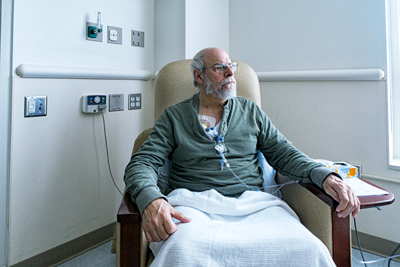
You are most likely to have your chemotherapy treatment in the out patients' department. But you may have to spend a few days in hospital.

Talk to your specialist about any other tablets or medicines you take while you are on active treatment, including herbal or alternative remedies and dietary supplements. There is a chance they might interact with your chemotherapy drugs.


What chemotherapy is

Chemotherapy means treatment with drugs. But in cancer treatment it means 'cytotoxic chemotherapy' - drugs that kill cancer cells. The drugs work by disrupting the growth of cancer cells. As they circulate in the blood, they can reach cancer cells wherever they are in your body.

The drugs can't tell the difference between cancer cells and normal cells. Chemotherapy kills cells that are actively growing and dividing into new cells. Cancer cells do this much more often than normal cells, so they are more likely to be killed by the treatment. Cancer cells are not as good at repairing themselves as normal cells. Normal cells can usually repair any damage caused by chemotherapy.

For breast cancer, you may have chemotherapy

We have information about developments in chemotherapy and clinical trials in the breast cancer research section.


The drugs used to treat breast cancer

Quite a few different chemotherapy drugs are commonly used for breast cancer. So we can't say what your doctor will recommend. Usually you would have a combination of about 3 chemotherapy drugs together. But in some situations, your specialist may suggest one on its own. The drugs are

Some of the most common combinations used for breast cancer are

  • CMF - cyclophosphamide, methotrexate and fluorouracil
  • FEC - epirubicin, cyclophosphamide and fluorouracil
  • FEC-T - epirubicin, cyclophosphamide, fluorouracil and taxotere
  • E-CMF - epirubicin, followed by CMF
  • AC - doxorubicin (adriamycin) and cyclophosphamide
  • MMM - methotrexate, mitozantrone and mitomycin
  • MM - methotrexate and mitozantrone

In our main chemotherapy section, we have information about the specific side effects of individual chemo drugs and chemo combinations. The links above take you to the right page for each drug or combination. Or you can go through the alphabetical list yourself in the section about side effects of specific chemo drugs.

Different combinations of drugs have different side effects. For example, with AC or FEC, you are more likely to lose your hair than with CMF.

NICE guidance recommends that chemotherapy after surgery for breast cancer should consist of 4 to 8 cycles of a combination of drugs, including an anthracycline (epirubicin or doxorubicin). The National Institute for Health and Clinical Excellence (NICE) have approved the chemotherapy drug docetaxel (Taxotere) after surgery for women with early stage breast cancer who have lymph nodes under the arm that contain cancer cells. A review of chemotherapy trials for early breast cancer reported in 2009. It found that adding a taxane based chemotherapy (such as docetaxel or paclitaxel) to anthracycline chemotherapy seems to reduce the risk of the cancer coming back more than anthracycline alone.


Treatment before surgery

Chemotherapy before surgery can make a tumour smaller. This can mean you need less surgery. For example, you may be able to just have the cancer removed instead of having a mastectomy. But you will still need surgery, and sometimes radiotherapy or other treatments after the chemotherapy. Your specialist may suggest chemotherapy before surgery because they think it may also help to stop your breast cancer coming back.


Treatment after surgery

Chemotherapy after surgery is called adjuvant therapy. You may have this treatment because

  • The lymph nodes under your arm contained breast cancer cells
  • You had a large primary cancer in the breast
  • Your breast cancer cells were high grade (grade 3)
  • Your cancer cells did not test positive for hormone receptors and so are not likely to respond well to hormone therapy

Doctors use chemotherapy after surgery when they think there is a risk that cancer cells could have broken away from the tumour in the breast and spread to another part of the body. Chemotherapy can kill these cells and so reduces the risk of the cancer coming back.

Often, doctors use more than one chemotherapy drug at the same time. In 2005, the Early Breast Cancer Trialists' Collaborative Group (EBCTCG) reported that giving chemotherapy in this way increases survival from breast cancer and reduces the chances of it coming back. The multi drug chemotherapy helped women under 50 the most, but older women up to age 69 also benefited. The benefit for women over 70 is not clear as there were not enough women in the trials.

The EBCTCG in 2008 reported on women with breast cancer which is not sensitive to oestrogen. They found that multi drug chemotherapy was beneficial to these women both before the age of 50 and in older women up to the age of 69.

If you are still having periods, chemotherapy may help in another way. It can stop your ovaries from making oestrogen. Oestrogen can stimulate some breast cancer cells to grow. Some specialists think this may be the main reason that chemotherapy is such a successful treatment for pre-menopausal women. Unfortunately, the loss of oestrogen means you may have an early menopause and become infertile, which can be difficult to cope with if you wanted to have a child.

Not all women who have chemotherapy become infertile. Some women find that their ovaries begin working again after chemotherapy. This depends on your age when you have the treatment. And on the type of chemotherapy drugs that you have. If you still don't have periods a year after your treatment, unfortunately it is not likely that your ovaries will recover.

You may also be advised to have hormone therapy after surgery and chemotherapy. There is a section about hormone therapy for breast cancer in CancerHelp UK.


Treating cancer that has come back

Many women have no more problems after their original treatment for breast cancer. But sometimes breast cancer comes back or spreads. Breast cancer that has spread to other parts of the body is called 'secondary breast cancer' or 'metastatic' breast cancer. Secondary breast cancer is often treated with chemotherapy.

Remember - secondary breast cancer can often be kept under control for several years with the right treatment.


How you have chemotherapy

You may take some chemotherapy drugs as tablets or capsules that you swallow. But most of them are given into a vein through a small tube or by drip. There is information in CancerHelp UK's chemotherapy section about giving chemotherapy into the bloodstream.

You have chemotherapy as a course of treatment. The length of time a whole course takes varies depending on the drugs you have. Often, you have the drugs for between 1 and 5 days, then have a break for 3 to 4 weeks. The drug treatment, followed by the break makes up one 'cycle'. Then the cycle begins again. You may have up to 8 treatment cycles. So a complete course of treatment can take up to 8 months. There is more about treatment cycles and planning chemotherapy in our main chemotherapy section.

The number of courses you have depends on

  • The type of breast cancer
  • The drugs used
  • In cancer that has spread it also depends on how well the cancer responds to the drugs

You are most likely to have your chemotherapy treatment in the outpatient department. But you may have to spend a few days in hospital. This depends on the drugs you have. Each time you start a new cycle of treatment, your doctors will check your blood cell counts first. They need to do this to make sure you have recovered from your last chemo treatment. In practice, this usually means getting to the clinic early and spending a while waiting for the results. But if your blood counts are not high enough, your chemotherapy may be delayed for a few days.


Nutritional or herbal supplements and chemotherapy

Doctors are concerned about patients taking dietary supplements and herbal medicines when they have chemotherapy. Doctors often don't know what their patients are buying over the counter or getting from alternative or complementary therapy practitioners. We don't yet know much scientifically about how some supplements may interact with chemotherapy and some could be harmful.

Talk to your specialist about any other tablets or medicines you take while you are having active treatment. There is information about the safety of herbal, vitamin and diet supplements in the complementary therapies section of CancerHelp UK.


Where to find more information

Scientists and doctors are working together all the time to investigate new chemotherapy drugs and combinations. You can find out about current chemotherapy trials for breast cancer by searching our clinical trials database. Choose 'breast' from the drop down menu of cancer types.

You may also like to contact one of the breast cancer organisations. They often have books and leaflets, some of which are free. We also have details of breast cancer books.

There is more information in the main chemotherapy section. It explains the treatment in detail including