Types of breast cancer surgery
This page tells you about the different types of surgery used for breast cancer. You can find information about
Types of breast cancer surgery
Before any operation your surgeon will talk to you about the most appropriate type of surgery in your case. Remember - no operation is done without your consent. The type of surgery you have depends on the size of the cancer in your breast, whether it has spread to any other part of your body, and your personal preference.
You may need to have the whole breast removed (mastectomy), only the lump removed (lumpectomy or wide local excision), or part of the breast removed (quadrantectomy). We have more information about the different types of surgery on the full version of this page.
You may also need radiotherapy afterwards, particularly with conservative surgery. Conservative surgery means taking away just the cancer, and leaving behind as much healthy breast tissue as possible. It includes lumpectomy and quadrantectomy.
Some women want to keep their breast at all costs. Others want a mastectomy, because they want to feel the cancer has gone or they prefer not to have radiotherapy. Both treatment approaches work equally well for early breast cancer.
Removing lymph nodes from under the arm
Your surgeon may remove some lymph glands from under your arm, to see if they contain cancer cells. If they do, your surgeon will want to remove all, or most, of the remaining nodes from under your arm.
Before any operation your surgeon will talk to you about the most appropriate type of surgery in your case.
Remember that no operation or procedure is done without your consent.
The type of surgery you have will depend on
- The size of the cancer in your breast
- Whether it has spread to any other part of your body
- Your personal preference
When your breast cancer is diagnosed, your surgeon will talk to you about which type of surgery you need. In some situations you may be offered a choice of treatments.
You may need to have
- The whole breast removed (mastectomy)
- Only the lump removed (called 'lumpectomy' or 'wide local excision')
- A larger part of the breast removed (quadrantectomy)
You may choose to have a new breast shape made (breast reconstruction) at the time of surgery or later.
There are many types of breast surgery and other terms may also be used. For example, 'conservative surgery' includes lumpectomy (wide local excision) and quadrantectomy. 'Mastectomy' means removing the whole breast.
If you have conservative surgery, you will need to have radiotherapy to the remaining breast tissue after your operation. You may also need radiotherapy after a mastectomy. This depends on how much risk there is of the cancer coming back in the chest muscle. If there are any cancer cells left in the rest of your breast, the radiotherapy should kill them off. You might also have radiotherapy to the lymph nodes above the collarbone after your surgery. Usually your surgeon will discuss your treatment with the radiotherapist after your operation, when all your results are back. They can't plan your treatment until they have all the staging information. And this will not be available until after your operation.
There may be good reasons why your surgeon recommends a particular type of operation for you. But usually, they will try to follow your wishes. Some women want to keep their breast at all costs. Others want to have a mastectomy, because it makes them feel more sure that the cancer has gone. Or they want to avoid radiotherapy, if possible. A great deal of research has proved that conservative surgery with radiotherapy works as well as mastectomy at getting rid of early breast cancer. So, some women with early stage breast cancer may be able to choose between a mastectomy or conservative surgery with radiotherapy. They may also have a choice about whether to have breast reconstruction at the same time or at a later date.
All breast surgery leaves a scar. Your surgeon will be able to tell you what to expect in your case and may be able to show you photos of the likely appearance of your breast after the surgery.
Surgery to remove a breast lump means taking away just the cancer and a border of healthy tissue all around it. The surgeon leaves behind as much healthy breast tissue as possible. The tissue that is removed is sent to a pathologist, who examines it under a microscope. The pathologist checks for cancer cells in the border around the lump. If it is clear, your report will say there is a 'healthy margin' or 'clear margin'. It is very important to have clear margins with any surgery to remove a cancer. It means that you can be reasonably sure that all the cancer cells have been taken away. So the risk of the cancer coming back in the future is lower.
Surgery to take away a breast lump is called
- Lumpectomy or
- Wide local excision
You may need more surgery after a lumpectomy if there was no 'clear margin' of tissue around the lump.
The scar on the breast after a wide local excision is usually quite small. And the scar from having lymph nodes removed is under the armpit and so can't be seen from the front.

Another type of breast conserving operation is a quadrantectomy. This operation is not done very often now. It is like a wide local excision, but the surgeon takes away about a quarter of the breast tissue. The result is more noticeable than lumpectomy. So you may want to have breast reconstruction after conservative surgery to rebuild the area that has been removed.
After any of these operations, you will need to have radiotherapy to kill off any breast cancer cells that may have been left behind in the rest of your breast tissue.
For some women, a mastectomy (removing the breast) is needed. Mastectomy is the most suitable treatment if you have
- A large lump, particularly in a small breast
- A lump in the middle of your breast
- More than one area of cancer in your breast
- Areas of DCIS in the rest of the breast
There are different types of mastectomy
- A mastectomy removes the breast tissue (including the skin and the nipple) and the tissues that cover the chest muscles
- A radical mastectomy also removes the muscles of the chest wall (although this operation is rarely done now)
The scar from a mastectomy extends across the skin of the chest and into the armpit.

If you are having a mastectomy, your surgeon should discuss with you the options for breast reconstruction at the same time (immediate reconstruction). Breast reconstruction means you have a new breast created. Breast reconstruction can also be done months or years after your original operation. Talk it over with your doctor before your treatment and ask about the different methods. For more information, look at our breast reconstruction section which explains what reconstruction is, who it is for, and some common methods and possible problems.
If your doctors think there is a risk of the cancer coming back in the area of the scar, you may be offered radiotherapy after a mastectomy.
If breast cancer spreads, it usually spreads first to the nearby lymph nodes.

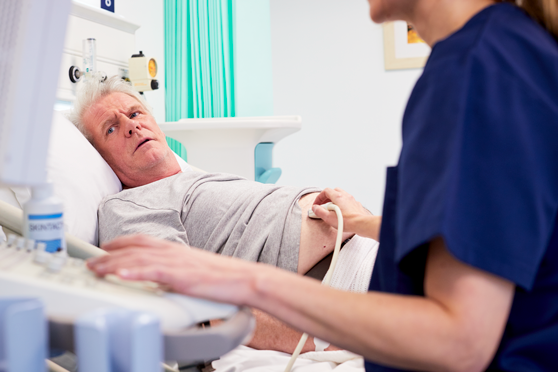
If you have early breast cancer, you will usually have an ultrasound scan under your arm (axilla) before surgery to see if the lymph nodes there look normal. If your doctor thinks some of the lymph glands look abnormal, they may want to take a biopsy, or a 'fine needle aspiration'. The doctor uses the ultrasound scanner to guide a needle into the suspicious lymph nodes and takes out some fluid and cells. This is then examined for cancer cells in the lab.
Your doctor may also remove 4 or more lymph nodes from under your arm during your breast cancer surgery. These nodes are then examined in the lab to see whether they contain cancer cells.
If cancer cells are found in the lymph nodes, your surgeon will want to remove all, or most, of the remaining nodes from under your arm, during your initial operation or at a later operation. This is called 'axillary clearance' or 'axillary lymph node dissection (ALND)'.
Sentinel lymph node biopsy is another way of finding out whether cancer cells have spread into any of the lymph nodes under the arm. During your breast cancer surgery, your surgeon injects a small amount of blue dye into the area of the breast around the tumour. Sometimes they also inject a mildly radioactive tracer. The dye drains away from the breast to the lymph glands close to the area.
The surgeon can see when the dye reaches the first group of lymph nodes. These are known as the sentinel nodes. The surgeon removes 1 to 3 of these nodes and sends them off to the lab to see if they contain cancer cells. If the surgeon thinks any of the sentinel nodes looks as though they contain cancer cells, they will remove the node and the nodes around it. Usually, the operation is then over, and you and your surgeon will get the results of tests on the sentinel node a week or so later.
If the lab finds that none of the lymph nodes contain cancer cells, you won't need to have any more nodes removed. If cancer is found in the sentinel nodes, you will usually be offered a second operation to remove all, or most, of the nodes under the arm. This is called an axillary clearance. If it is not possible for you to have this operation for any reason, you will be offered radiotherapy to the armpit, to kill off any remaining cancer cells. You may also be offered radiotherapy to the lymph nodes above your collarbone, in an area called the 'supraclavicular fossa'.
In some hospitals, it may be possible for your surgeon to get the laboratory to check the sentinel node while you are still under anaesthetic. This means the surgeon can find out if there is cancer in the sentinel node while you are still in the operating theatre. They can then continue to remove all the other nodes if necessary, so you avoid having a second operation. But there are drawbacks with this. The pathology lab may not be able to examine the whole sentinel node immediately. Many surgeons prefer to wait for a more detailed examination of the nodes so they are absolutely sure no cancer has been missed.
From trial results, we know that sentinel lymph node biopsy is less likely to cause arm swelling, or weakness or numbness in the arm and shoulder, compared to other types of lymph node surgery. It is being introduced across the UK. Not all hospitals have facilities to do sentinel node biopsy, so you may need to travel to another hospital to have it.
You can find some helpful questions about surgery for breast cancer in the questions for your doctor page.