Men and women discussing liver cancerWhich treatment for liver cancer?

This page gives you an overview of treatments for primary liver cancer. You can use these links to go straight to sections on


A quick guide to what's on this page

Which treatment for liver cancer?

Surgery and chemotherapy are the main treatments for liver cancer. Occasionally, you may have radiotherapy or other treatments to help control liver cancer.

Surgery for primary liver cancer.

There are two main operations for liver cancer. These are a liver transplant, or surgery to remove the cancer from your liver. Your specialist will only consider surgery if the cancer is contained within the liver and has not spread to any other part of the body.

Chemotherapy and other treatments

Your specialist may suggest chemotherapy to shrink a tumour that cannot be removed with surgery. In hepatoblastoma, the type of liver cancer that affects children, it is more common to use chemotherapy. Your specialist may suggest other treatments to help control liver cancer. 

Controlling symptoms

Treatment to slow down the growth of cancer and to relieve symptoms is called palliative treatment. Chemotherapy, radiotherapy and surgery are all used palliatively. Your doctor may offer treatment to help control symptoms such as pain, breathing problems, weight loss and jaundice.


Primary or secondary cancer

This section of CancerHelp UK covers treatments for cancer that started in the liver. In other words, it is the liver cells themselves that have become cancerous. Most 'liver cancers' in the UK are secondary cancers. That means the cancer started somewhere else in the body before cancer cells broke away from the main tumour and travelled to the liver. This is important because secondary cancers respond to the same treatments as their primaries. If you are looking for information on a secondary liver cancer, you are in the wrong part of this website. You need to look at information about your particular type of primary cancer.


The main treatments for primary liver cancer

The main treatments for primary liver cancer are surgery and chemotherapy. Occasionally radiotherapy and ablation may be used. In some cases, one type of treatment is all that is needed. However, sometimes they are used in combination. Your case may be considered by a variety of doctors who specialise in different aspects of treatment, but who work together in a team. This may include

  • A surgeon
  • A specialist in diseases of the digestive system (gastroenterologist)
  • A specialist in liver diseases (hepatologist)
  • A cancer specialist (a medical or clinical oncologist)

Which treatment is best for you will depend on

  • The type of liver cancer you have
  • The stage of your cancer
  • Your general health

Your specialist may suggest a single type of treatment or a combination of treatments, depending on your circumstances.


Surgery for primary liver cancer.

Surgery for liver cancer is the best treatment we have if the cancer hasn't spread. There are two main options

  • A liver transplant
  • Surgery to remove the cancer from your liver

These are both potentially curable treatments. But unfortunately, only a small number of patients have cancer diagnosed early enough to benefit. Unfortunately, it is not possible for many people to have their cancer removed with surgery. Fewer than a third of hepatomas are likely to be removable when they are diagnosed. Your specialist will only consider surgery if the cancer is contained within the liver and has not spread to any other part of the body. If the cancer is small, surgery may cure it. Unfortunately, there is still a risk that the cancer may come back in the future because cells have broken away from the cancer and travelled to a different part of the body before the tumour is removed.

Liver transplant

Hepatocellular cancer (HCC) is more likely to develop in people with chronic cirrhosis. Your specialist may suggest a liver transplant if you have cirrhosis of the liver because of previous liver disease, infection with a hepatitis virus or from drinking alcohol. You will only benefit from a liver transplant if you have a single liver tumour that is less than 5cm across, or up to 3 tumours all less than 3cm across. There is an added difficulty of having to wait for a suitable donor. This can take months. During this delay, the cancer will continue to grow and you have other treatment to try to control it.

Unfortunately, if you have very severe cirrhosis you are less likely to be fit enough to have this major surgery. A specialist transplant surgeon will look at all your test results and decide whether you are likely to make a good recovery from the surgery. Liver surgery in people with advanced cirrhosis can cause the liver to stop working altogether.

For the vast majority of people with primary liver cancer, transplant will not help. It is just too big an operation to survive if you are already very ill. Most importantly, if your cancer has already spread outside the liver, transplant will not cure it. You would go through a very major operation, only to find that the cancer started to grow somewhere else. With any organ transplant, you have to take drugs to stop your body rejecting the donated organ. These drugs damp down the activity of your immune system and so it would not be as effective at fighting the cancer off.

Surgery to remove the cancer

Depending on the site and size of the cancer, surgery can involve removing anything from a small wedge of liver to up to 80% of the liver. The liver is the only body organ that can grow back. Even if you have more than half your liver removed, it can grow back to normal size in a matter of weeks.

Fibrolamellar hepatocellular cancer more often develops in people who do not have cirrhosis. It is often possible to remove these cancers with surgery.


Chemotherapy

Your specialist may suggest chemotherapy for liver cancer to try to shrink a tumour that cannot be removed with surgery. The aim of the treatment is to try to slow down the progress of the cancer and help control symptoms. Generally speaking, chemotherapy into a vein hasn't proved to be particularly successful for primary liver cancer in adults. If your specialist does suggest this treatment, it may be within a clinical trial to test a new drug or combination of drugs. Or you may have a different type of chemotherapy called ' chemoembolisation'.

In hepatoblastoma, the type of liver cancer that affects children, it is more common to use chemotherapy. Your child's specialist may suggest it before surgery to shrink the cancer, or after surgery to try to stop the cancer from coming back. Chemotherapy is now thought of as standard treatment for hepatoblastomas.


Radiotherapy

The liver does not respond well to radiotherapy as it is badly affected by radiation. This type of treatment may be used for gallbladder cancer (cholangiocarcinoma) but not usually for hepatocellular cancers.

Other Treatments

Your specialist may suggest one of the following treatments to help control liver cancer

These treatments are still being studied to see how useful they are. If you are offered any of these treatments, you may be asked to take part in a clinical trial so that doctors can increase their knowledge of treatment for liver cancer.


Injecting alcohol into the tumour

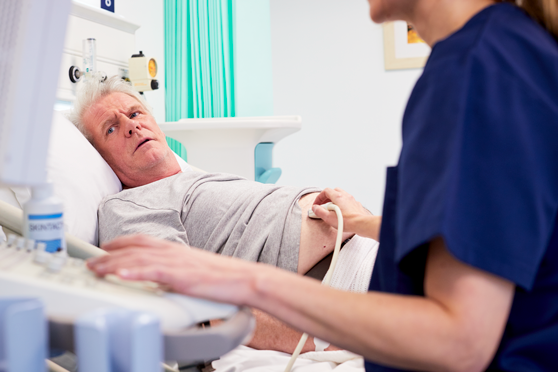
This is called a percutaneous ethanol injection. It means injecting alcohol (ethanol) through the skin, directly into the cancer in the liver. The treatment is given during an ultrasound scan so that the doctor can see exactly where they are putting the needle.

The alcohol kills the cancer by dehydrating the tissue and stopping the blood supply to the cancer. This type of treatment is most useful for people who have a small number of tumours measuring about 3 - 4cm across. You are most likely to have this done under local anaesthetic. During each session, you may have 1 or 2 injections. The number of treatment sessions you have will depend on the size and number of tumours in your liver.

You may have some pain or a fever after this treatment. These side effects can be controlled with medication.


Radiofrequency ablation (RFA)

Ablation means destroying. This treatment uses radio waves to heat up the cancer cells until they are killed off. The treatment is similar to having percutaneous ethanol injection. You may have it under local anaesthetic or you may have a general anaesthetic. To have the treatment, you have a needle put through the skin directly into the tumour. Again, you have an ultrasound scan while you are having treatment so that the doctor can see where the cancer is. Laser light or radio waves are passed down the needle, heating the cancer cells and killing them. Side effects are pain and sometimes a fever, but these can be controlled with medication.

You may have this treatment in out patients and be able to go home afterwards, or you may have a short stay in hospital. In some situations, you may have RFA while you are having another operation - either during a laparoscopy or during open surgery.

In July 2003 the National Institute for Clinical Excellence (NICE), issued guidance on RFA for primary liver cancer. They say that

  • RFA seems useful enough and safe enough to use for hepatocellular cancers that cannot be completely removed with surgery
  • You should have CT scan or ultrasound to guide the RFA
  • Patients for this treatment should be under the care of a multi-disciplinary team, including a liver surgeon

You can't always have RFA for primary liver cancer. It isn't suitable if the cancer is very close to any major blood vessels because of the risk of severe bleeding.


Injecting chemotherapy into the liver's blood supply

This is called chemoembolisation.  It is a way of introducing chemotherapy directly to the area of the liver that contains the cancer. The chemotherapy drug is mixed with a dye made from poppy seed oil. This dye, called lipiodol, is quite safe because it is used in a medical test called a lymphangiogram. As well as the dye and the drug, your doctor will inject something to block the artery that is supplying blood to the liver tumour. This could be tiny plastic beads or a gelatin sponge. The combination of putting in the chemotherapy drug and blocking the blood supply helps to kill off the tumour. There are side effects for several days after the treatment, such as pain, sickness and raised temperature. There is more about chemoembolisation in the chemotherapy for liver cancer section.


Freezing the tumour (cryotherapy)

This is also called cryosurgery.  This treatment may be useful if surgery is not an option for you, although specialists don't use it so often for primary liver cancer these days. The doctor puts a metal probe into the part of the liver that contains the cancer. The probe contains liquid nitrogen, which is extremely cold. It freezes the tissue nearest to it. So if placed into or next to a tumour, it will destroy the cancer. You may have this treatment during surgery or during a laparoscopy.

This treatment can be painful. This can usually be controlled with painkillers and only lasts for a short period of time after you have been treated. Some people develop a fever afterwards, but this can also be controlled with medication.


Liver cancer that comes back

If cancer comes back after its initial treatment, this is called a recurrence. Liver cancer can come back in the liver, in nearby organs or in other parts of the body, such as the lungs and bones.

If your liver cancer comes back, your specialist may suggest more surgery, chemotherapy or one of the other treatments mentioned above. This will depend on the type of cancer you have, the treatment you have had before, where the cancer has spread and your general health.


Controlling symptoms

You may hear people refer to cancer treatments as radical or palliative. Radical treatments aim to get rid of the cancer completely. Palliative treatments are used to slow down the growth of the cancer and to relieve symptoms. Palliative treatment may help someone to live longer and to live comfortably, even if they cannot be cured.

Your specialist may talk to you about palliative treatment if you have primary liver cancer. This is because liver cancer may not be diagnosed until it quite advanced and is then not possible to cure. Sometimes people who have liver cancer may be too ill to cope with intense chemotherapy, radiotherapy or surgery because they have other conditions such as cirrhosis or hepatitis. If the cancer has spread outside the liver before it is diagnosed, it cannot be cured. Most cancers cannot be completely cured once they have spread.

Palliative treatment does not just mean painkillers and anti sickness drugs. It also means treatment that is used to relieve symptoms, without going for cure. Chemotherapy, radiotherapy and surgery can all be used palliatively. Your doctor may offer treatment to help control symptoms such as pain, breathing problems, weight loss and jaundice. There is a section of CancerHelp UK that is about cancer symptoms and side effects. It includes information on pain control and coping with sickness as well as several other symptoms.