Men and women discussing lung cancerAbout chemotherapy for lung cancer

This page tells you about chemotherapy for lung cancer. There is information about


A quick guide to what's on this page

About chemotherapy for lung cancer

Chemotherapy means using anti cancer or ‘cytotoxic’ drugs to destroy cancer cells.

Chemotherapy for small cell lung cancer

Chemotherapy is the main treatment for small cell lung cancer. This type of cancer responds very well to chemotherapy. And because chemotherapy treats the whole body, it can treat any cells that have already broken away from the lung tumour.

Chemotherapy for non small cell lung cancer

Chemotherapy can be used to treat non small cell lung cancer. You may have it before or after surgery or radiotherapy. If you have advanced non small cell lung cancer, your doctor may suggest combined treatment with radiotherapy and chemotherapy. Or you may have it to help control symptoms of the cancer.

How you have chemotherapy

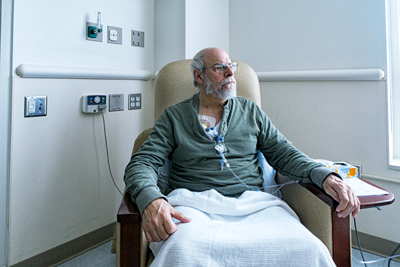
You have most chemotherapy drugs by injection into a vein or through a drip. But there are some that come as tablets or capsules that you swallow. Usually, you have treatment with a combination of 2 or 3 different drugs. Most often, you have chemotherapy every 3 or 4 weeks. You usually have 4 - 6 treatments. So a full course can take 3 to 4 months. 


What chemotherapy is

Chemotherapy means using anti cancer or 'cytotoxic' drugs to destroy cancer cells. These work by disrupting the growth of cancer cells. Chemotherapy drugs circulate in the blood and so can reach cancer cells wherever they are in your body.


Chemotherapy for small cell lung cancer

Chemotherapy is the main treatment for small cell lung cancer. Doctors use it because

  • This type of cancer responds very well to chemotherapy
  • Small cell lung cancer tends to have spread beyond the lung when it is diagnosed

Chemotherapy drugs circulate in the bloodstream and can reach cancer cells wherever they are in the body. So it can treat cells that have broken away from the lung tumour and spread to other parts of the body even if they are too small to see on scans. This 'microscopic spread' often happens even in the early stages of small cell lung cancer.

Often chemotherapy is used on its own. Or you may have chemotherapy before radiotherapy (or at the same time). If you are to have surgery for very early small cell lung cancer, your doctor may suggest that you have chemotherapy before or after surgery.

Commonly used chemotherapy combinations for small cell lung cancer include

Small cell lung cancer usually responds well to these treatments, but researchers are continuing to test other combinations to see if they can either improve the results, lessen the side effects, or both.

For cancer that has come back after treatment, ACE chemotherapy is commonly used (doxorubicin, cyclophosphamide and etoposide) or CAV chemotherapy (cyclophosphamide, doxorubicin and vincristine). In Wales, the All Wales Medicines Strategy Group (AWMSG) has recommended topotecan chemotherapy for people who have a heart condition and cannot have doxorubicin. Doxorubicin can cause damage to the heart.

There is information about current chemotherapy research in the what's new in lung cancer page in this section. And you can look for open trials in our clinical trials database. Choose 'lung' from the drop down menu of cancer types.


Chemotherapy for non small cell lung cancer

Chemotherapy can be used to treat non small cell lung cancer in the following situations

  • Before or after surgery, to lower the risk of the cancer coming back
  • Before, after, or alongside radiotherapy treatment to get rid of the cancer
  • To control symptoms and try to help people live longer

Combinations of chemotherapy tend to work better than single drugs. The drugs commonly used include

Chemotherapy before surgery is called 'neoadjuvant therapy'. A review of research trials in 2007 found that this type of treatment helped some people with non small cell lung cancer to live longer. More research is needed to find out which patients will benefit most. You can read this review of neoadjuvant chemotherapy for non small cell lung cancer in the Cochrane Library. It was written for researchers and specialists so is not in plain English.

After surgery your doctor might suggest chemotherapy to help lower the risk of the cancer coming back. It is important that your doctor talks to you beforehand about the benefits and possible risks of chemotherapy because the drugs can cause side effects. Chemotherapy tends to work best in patients who are fit. If you are fit enough to have chemotherapy you usually start it within about 8 weeks of having surgery.

Some studies have found that giving chemotherapy after radiotherapy helps people with non small cell lung cancer to live longer even if they are not likely to be cured of their cancer. If you have advanced non small cell lung cancer, your doctor may suggest combined treatment with radiotherapy and chemotherapy as the best way of trying to control it. The National Institute for Clinical Excellence (NICE) recommend that chemotherapy with either gemcitabine, paclitaxel (Taxol), docetaxel (Taxotere) or vinorelbine, together with a platinum drug (carboplatin or cisplatin) should be the first choice for people with advanced non small cell lung cancer (stages 3 and 4), as these are likely to be the most effective drugs.

If you have had chemotherapy before and the cancer has continued to grow or spread, NICE recommend treatment with docetaxel (Taxotere) alone. A biological therapy drug called erlotinib (Tarceva) is sometimes used instead of docetaxel. Your doctor will talk to you in detail about the possible risks and benefits of further treatment. These treatments will not help everybody. It will depend on how fit you are, and how able you are to cope with side effects of treatment.

A drug called pemetrexed has been licensed to treat advanced non small cell lung cancer. In England, The National Institute for Health and Clinical Excellence (NICE) have decided that pemetrexed with cisplatin should be available for people as a first treatment on the NHS. They say it should be available it for people with adenocarcinoma or large cell cancer of the lung whose cancer is locally advanced or has spread to another part of the body.

The Scottish Medicines Consortium (SMC) have decided that pemetrexed can be used on the NHS in Scotland, in slightly different circumstances. They recommend that pemetrexed can only be used as a second line treatment, so you must already have had some treatment for advanced non small cell lung cancer. And you must be reasonably able to look after yourself. The cancer must be locally advanced, or have spread to another part of the body. And it should be mainly large cell or adenocarcinoma, rather than squamous cell cancer.


How you have chemotherapy

You have most chemotherapy drugs by injection into a vein or through a drip. But there are some that come as tablets or capsules that you swallow.

How you have the drugs - and how often - depends on which drugs you are having. Usually, you have treatment with a combination of 2 or 3 different chemotherapy drugs together. You will need to ask your chemotherapy nurse or doctor to explain the details of your treatment to you.

Most often, you have the chemotherapy treatment every 3 to 4 weeks. Then you have a rest period to allow your body to get over any side effects. The number of treatments you have depends on

  • Which drugs you are having
  • The type of cancer you have
  • How well the treatment is working
  • How your body is coping with the side effects

You can have most chemotherapy drugs as an outpatient. So you go into the hospital or clinic for the day to have treatment and go home afterwards. Your chemotherapy nurse will give you medicines to take home in case you need them to control side effects.

Some chemotherapy drugs have to be given in hospital. Usually this is because you have to have them through a drip over a number of hours. So depending on your treatment, you may have to stay overnight, or for a few days.


How many treatments you may have

Most chemotherapy is given for 4 to 6 treatments. So a full course can take 3 to 6 months.

If you are having treatment to control symptoms, it is most important that you don't continue with treatment that is not helping your symptoms or is causing bad side effects. The aim of the treatment is to help you feel better.

Your doctor will keep an eye on your progress by monitoring your symptoms and possibly by checking the size of your cancer on scans and X-rays. If the treatment is working well you will continue. If the treatment is not working well your doctor will suggest changing to a different treatment or stopping it. It may be very upsetting to be told your treatment is being stopped after only 2 treatments when you thought you'd have more. But you can talk to your doctor or specialist nurse about the other treatment options in this situation.


Nutritional or herbal supplements and chemotherapy

Doctors are concerned about patients taking dietary supplements and herbal medicines when they have chemotherapy. Doctors often don't know what their patients are buying over the counter or getting from alternative or complementary therapy practitioners. We don't yet know much scientifically about how some supplements may interact with chemotherapy and some could be harmful.

Talk to your specialist about any other tablets or medicines you take while you are having active treatment. There is information about the safety of herbal, vitamin and diet supplements in the complementary therapies section of CancerHelp UK.


Getting more information

Look at the main chemotherapy section in CancerHelp UK. It gives detailed information about

You can ask your doctor or chemotherapy nurse to write down the names of the drugs you will have so you can look them up in our specific drug side effects section. There are pages there for all the most commonly used chemotherapy drugs. Each drug page has information about common, occasional and rare side effects for that drug.

Our lung cancer organisations page gives details of people who can give information about lung cancer chemotherapy. Some organisations can put you in touch with a cancer support group. Our lung cancer reading list has information about books and leaflets on lung cancer treatments.