Men and women discussing non Hodgkin's lymphomaBiological therapy for non Hodgkin's lymphoma

This page tells you about treatment with monoclonal antibodies for non Hodgkin's lymphoma. There is information on


A quick guide to what's on this page

What are monoclonal antibodies?

There are several different types of biological therapies. The type used most often in lymphoma is a monoclonal antibody. Monoclonal antibodies (MABs) are proteins made in the laboratory that target the cells of particular types of cancer. A MAB called Rituximab is now commonly used to treat some types of lymphoma. It is also called Mabthera or Rituxan.

Who can be treated

Rituximab is part of standard treatment for high grade diffuse B cell lymphoma diagnosed at stage 2, 3 or 4. Rituximab is also part of standard treatment for low grade follicular NHL that is resistant to chemotherapy or has relapsed at least twice after successful treatment with chemotherapy. And it is now used in certain situations to treat follicular lymphoma.

Having the treatment

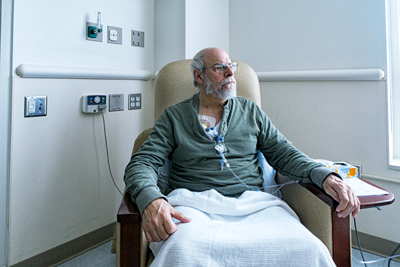
You have rituximab through a drip (infusion). You may have to stay in overnight for your first treatment. The number of doses of rituximab and how often you have it depend on your type of lymphoma, and whether you are having it with other drugs.

Side effects

During the infusion, you may have fever, chills and shivering, feeling sick, an itchy rash, or a headache. About 1 in every 20 people treated will also have wheezing and a drop in blood pressure.


CR PDF Icon You can view and print the quick guides for all the pages in the Treating NHL section.


What monoclonal antibodies are

Monoclonal antibodies are a type of biological therapy. There are several different types of biological therapies. Monoclonal antibody therapy is the type used most often in lymphoma. Monoclonal antibodies (MABs) are proteins made in the laboratory from a single copy of a humanised antibody.

Many different antibodies are made by our bodies as part of our immune system’s reaction to infection or damaged cells. To create a new treatment, scientists have to spend years finding an antibody that attacks the cells of one type of cancer, but does not harm normal cells. They separate out the antibody in the laboratory and then make millions of copies of it - all the same.

Many different monoclonal antibodies are being investigated for cancer treatment. Rituximab was the first to be licensed in the UK and is now commonly used to treat some types of lymphoma. It is also called Mabthera or Rituxan. Other MAB therapies are being tested for NHL.


Treatment with rituximab

Rituximab is the most common monoclonal antibody used in NHL.

How rituximab works

Monoclonal antibodies target one particular protein found on the surface of cells. Rituximab targets a protein called CD20. All B cells have the CD20 protein on the outside of the cell. The most common types of low grade non Hodgkin’s lymphoma develop when some of the B cells become cancerous. The cancerous B cells also carry the CD20 protein. The antibody sticks to all the B cells it finds. The cells of the immune system then pick out these B cells and kill them.

B cells develop from cells in the bone marrow called stem cells. B cell stem cells do not have the CD20 protein. So they are not killed by rituximab, and normal healthy B cells can grow to replace the ones that have been killed. Normal B cell levels in the blood are restored within a few months of having the treatment.

Who can be treated

Rituximab is part of standard treatment for people who have high grade diffuse large B cell lymphoma. The National Institute for Health and Clinical Excellence (NICE) recommend R-CHOP (rituximab and CHOP chemotherapy) for people with this type of lymphoma diagnosed at stage 2, 3 or 4. They don't recommend rituximab if you are not able to have CHOP for any reason. Rituximab is also part of standard treatment for low grade follicular NHL that

  • Is resistant to chemotherapy
  • Has relapsed at least twice after successful treatment with chemotherapy.

Follicular lymphoma is a type of low grade B cell NHL. For this type of lymphoma, trials have used rituximab with chemotherapy drugs. NICE has approved rituximab with chemotherapy as a treatment option for people with stage 3 or 4 follicular lymphoma that is causing symptoms or has come back after previous treatment. The treatment aims to get rid of all signs of the lymphoma (in other words, to induce remission). NICE has also approved rituximab alone as a treatment during remission or when all other treatment options have been tried.

A review of a number of different trials found that giving rituximab as 'maintenance therapy', after successful treatment for follicular lymphoma, could help some people to live longer. But the findings of this review only apply to people with follicular lymphoma which has come back or continued to develop after previously being treated.

Rituximab is still being tested in clinical trials for both low and high grade NHL. Our information on what's new in NHL has more about research into rituximab for NHL. Or you can search our clinical trials database for current trials. Choose 'lymphoma' from the drop down list of cancer types, or type 'rituximab' into the free text search box.

Having the treatment

You have rituximab through a drip (infusion). You may have to stay in overnight for your first treatment, but after that it is often given as an outpatient and you can go home after your treatment is over. Some people have a reaction to it and need some extra drugs. The number of doses of rituximab and how often you have it depend on

  • Your type of lymphoma
  • Whether you are having it with other drugs.

Side effects of rituximab

All treatment has some side effects. But rituximab side effects tend to be mild because it

  • Is developed from proteins that occur naturally in the body
  • Targets B cells and does not attack other body cells

You are most likely to have side effects when you first have the drug. During the infusion, you may have

  • Fever
  • Chills and shivering (rigors)
  • Feeling sick
  • Itchy rash
  • Headache

About half of the people treated with rituximab have a reaction to it. About 1 in every 20 people treated will also have

  • Wheezing
  • A drop in blood pressure

These side effects are most likely to come on in the first 2 hours of your first dose. The reaction can usually be prevented by having paracetamol and an antihistamine drug before the drip starts. If you do get side effects, they can usually be controlled by slowing down the drip or stopping it for a while. If you have a severe reaction, you may have to stay in hospital the first time you have it.


Other monoclonal antibodies used in NHL

Ibritumomab (Zevalin) is another monoclonal antibody that is licensed for NHL. Other MABs being developed and tested include

Bexxar and Zevalin are radiolabelled monoclonal antibodies. This means they have a radioactive molecule attached to an anti-CD20 monoclonal antibody. The antibodies target the B cells and the radioactive molecule kills them. Because the treatment is targeted to the B cells, only a very small amount of radioactive material has to be used for each treatment. So there should be fewer side effects than with standard radiotherapy. Low blood counts seem to be the main side effect with this type of treatment. Low blood counts can cause

  • Increased risk of infection
  • Increased risk of bruising or abnormal bleeding
  • Tiredness and breathlessness from anaemia (shortage of red blood cells)

The blood count recovers on its own over about 2 weeks.

Zevalin is an anti-CD20 antibody connected to a molecule of radioactive yttrium (Y-90). Zevalin is now licensed for use in the UK in people with CD20 positive follicular B cell NHL who have had rituximab and either it hasn't worked or their NHL has come back since their treatment. In July 2007, the SMC (Scottish Medicines Consortium) decided not to approve Zevalin for use in this way on the NHS in Scotland. A trial is currently looking at whether Zevalin and rituximab as an initial treatment can prevent or delay the need for chemotherapy treatment for follicular lymphoma. You can find out more about this trial on our clinical trials database. Click on cancer types and choose lymphoma from the drop down menu.

Bexxar is an anti-CD20 antibody connected to a molecule of radioactive iodine (I-131), and epratuzumab is a monoclonal antibody that seeks out the CD22 protein. This is also found on the outside of B cells.

Alemtuzumab (MabCampath) is a monoclonal antibody that seeks out the CD52 protein. This protein is on the outside of B and T cells. It is licensed as a treatment for chronic lymphocytic leukaemia. This drug has been tested to treat NHL in combination with chemotherapy before a transplant. And it has also been used for T cell lymphoma of the skin.